2083 shrawan 28 Thrusday


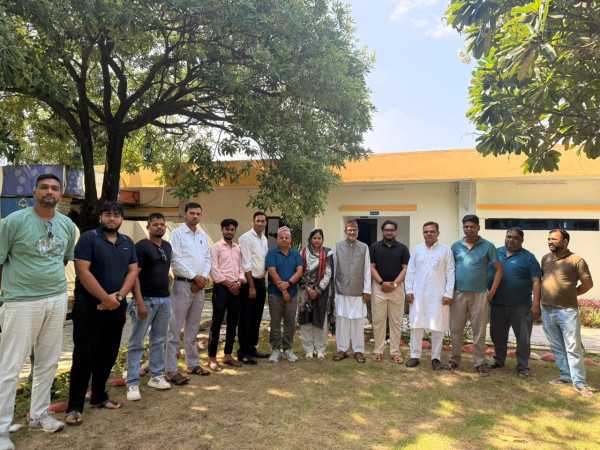
Speaking at a discussion program titled “Society’s Need and Sustainable Change” organized by Nepalese Matters in Nepalgunj, Ansari said that meaningful and lasting transformation is possible only through collaboration among the state, civil society, and the new generation.
“Sustainable change should not remain limited to policy or paper. It must be reflected in practice,” she said. “For that, equal opportunities, gender justice, and respect for all communities are indispensable.”
Ansari described the global Gen Z movement as a positive signal for transformation, noting that the new generation has become increasingly aware of its rights and is courageous enough to speak out against injustice.
“Gen Z is fearless. They question, they challenge inequality — and that consciousness is the foundation of sustainable change,” she stated.
She further stressed that without the equal participation of women, Dalits, indigenous groups, Muslims, Madhesis, and all marginalized communities, no reform can be long-lasting.
Chairing the program, Haji Abdul Rahman Miya, patron of Nepalese Matters, highlighted the need for tolerance, unity, and mutual understanding in society.
“We must connect not through religion, language, or identity, but through humanity,” he said. “If the youth unite for a common purpose, no division in society can persist.”
Miya also urged Muslim youths to take an active role in nation-building, adding that the Gen Z movement has opened new doors of opportunity for them.
Addressing the program, Professor Giriraj Poudel underscored that achieving the Sustainable Development Goals (SDGs) requires equal access to education, gender equality, and accountable governance systems.
Similarly, Mohammad Rihan Miya, coordinator of Nepalese Matters, said that while the Gen Z movement has raised the voice for equality and rights, equal representation of all communities is yet to be ensured.
“Until Muslim and other marginalized youths take leadership roles, the Gen Z movement will remain incomplete,” he remarked.
Advocate Jamaluddin Ansari emphasized that the Gen Z movement must help foster confidence and awareness among Muslim youths.
“We are not mere spectators of change; we are co-creators,” he said. “Muslim youth represent the nation’s future, and their voices deserve to be heard.”
Law student Noor Mohammad Ansari pointed out the need to integrate a human rights perspective into policies from the local to the federal level.
“Only when there is equal access to education, health, employment, and environmental justice will society truly understand the meaning of ‘sustainable change’,” he stated.


